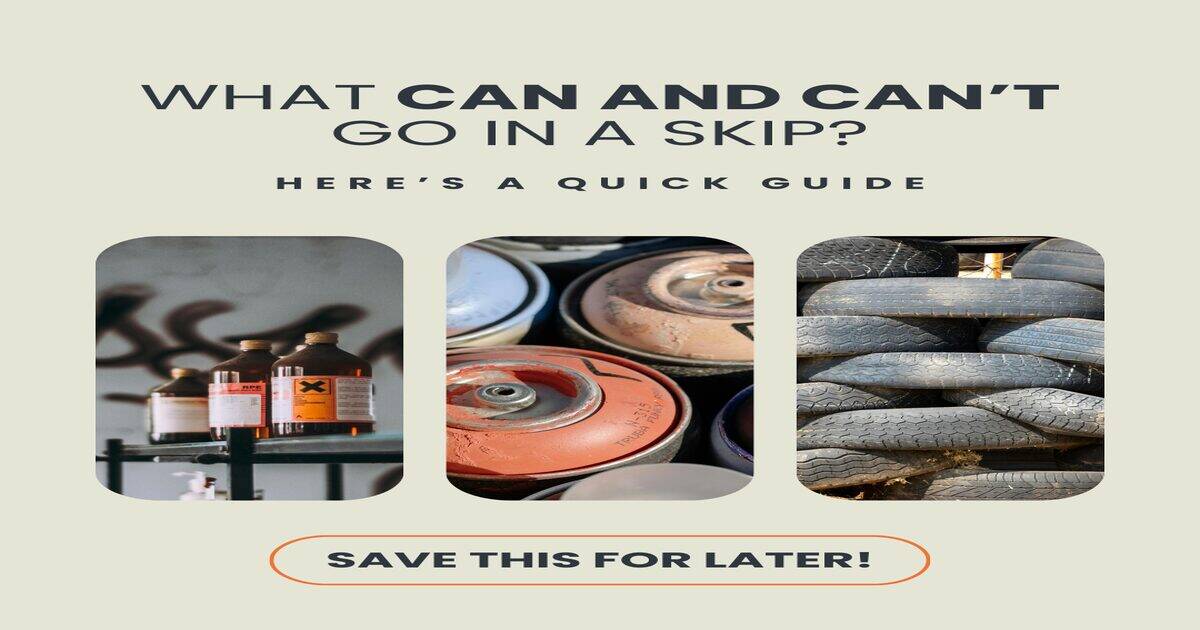
What can and can’t go in a skip is one of the most common questions we are asked — and getting it wrong can mean extra charges or a refused collection. The good news is that most everyday household, garden and construction waste is perfectly fine. A handful of items need to be handled separately by law — but unlike many skip companies, we can still take most of those for a small additional charge if you let us know when you book. Here is the full breakdown.
Ready to book a skip?
The Waste Group delivers skips from 4 to 40 yards across Dorset, with fast same- and next-day delivery and all-inclusive prices from £222 inc VAT.
Get an instant skip price & book online or call 0800 652 0160.
What you can put in a skip
The vast majority of non-hazardous waste can go straight in, including:
- General household waste — furniture (see the note on sofas below), packaging and non-electrical clutter. Carpet is fine in normal amounts — see the note on bulk carpet below.
- Garden waste — soil, turf, plants, hedge trimmings, branches and leaves.
- Construction and DIY waste — bricks, rubble, concrete, hardcore, tiles and ceramics.
- Wood — old furniture, floorboards, fencing, pallets and timber offcuts. Two exceptions we can’t take: treated railway sleepers and timber with old lead paint on it.
- Metal — pipes, radiators, railings and most scrap metal.
- Cardboard and paper — flattened boxes and packaging.
A quick note on heavy materials: soil, rubble and concrete reach their weight limit long before the skip looks full, so a smaller skip or an inert-only skip is usually the better choice for these.
Items we can take — but that need to be declared (small extra charge)
Some items can’t simply be buried in a mixed skip load because the law requires them to be recycled or destroyed separately. Many skip firms refuse them outright. We can still take the items below for a small surcharge — just tell us when you book so we can handle them correctly:
- Mattresses — single from £30, double from £36 (they need separate recycling).
- Sofas and upholstered furniture (POPs) — from £12 for a small item, £30 medium, £48 large. Since 1 January 2023, upholstered seating that may contain persistent organic pollutants (POPs) must be kept whole and sent for incineration rather than landfill, so it can’t go in a normal mixed load.
- Fridges and freezers — from £36 (they contain regulated gases).
- Other electrical items (WEEE) — small electricals from £12, larger appliances from £50.40, recycled under WEEE regulations.
- Tyres — car tyre from £14.40, on a rim from £21.60, lorry tyre from £43.20. Tyres are banned from landfill.
- Gas bottles and fire extinguishers — from £48 (a pressure and fire risk if mixed in).
- Car batteries — from £12.
- Empty paint tins — from £6 (tins must be empty and dry; wet paint is hazardous, see below).
- Plasterboard — gypsum must be kept apart from general waste, so we supply a dedicated plasterboard skip or plasterboard bag (from £144). See our guide on plasterboard in skips.
- Bulk carpet and roofing felt — fine in normal household amounts, but if it makes up more than about 10% of the load we price it at transport-and-tonnage rates rather than the flat skip price, because of how it has to be processed.
Items that can’t go in a skip at all
A small number of materials can’t go in any skip and need fully separate, licensed disposal:
- Asbestos — never put it in a skip. It needs licensed disposal in a sealed asbestos skip or by van collection (see can asbestos go in a skip?).
- Wet paint, liquids, oils, solvents and chemicals — classed as hazardous waste.
- Treated railway sleepers — creosote makes them hazardous waste.
- Timber with old lead paint — needs specialist disposal.
- Loose household and lithium batteries — a fire risk once a skip is compacted. Car batteries are fine, declared (see above).
- Clinical or medical waste — needs specialist disposal.
- Explosives, flares and ammunition.
At a glance — what goes in, what needs declaring, what doesn’t
| Item | Goes in a skip? | Notes |
|---|---|---|
| General household waste | Yes | — |
| Garden waste, soil, turf | Yes | Heavy — size down |
| Bricks, rubble, concrete | Yes | Heavy — inert skip usually better |
| Wood and timber | Yes | Not treated sleepers or lead-painted timber |
| Metal, pipes, radiators, pedal bikes | Yes | — |
| Cardboard and paper | Yes | Flatten first |
| Insulation (post-2000) | Yes | Bag it first |
| Mattresses | Declare | From £30 single / £36 double |
| Sofas and armchairs (POPs) | Declare | Small £12 · medium £30 · large £48 |
| Carpet and roofing felt | Declare if bulk | Over ~10% of the load is priced at tonnage rates |
| Fridges and freezers | Declare | From £36 |
| Small electricals — kettle, phone, vacuum | Declare | From £12 |
| Bulky electricals — TV, large goods | Declare | From £50.40 |
| Plasterboard | Separate skip | Plasterboard skip or bag, from £144 |
| Empty, dry paint tins | Declare | From £6 |
| Tyres | Declare | Car £14.40 · on a rim £21.60 · lorry £43.20 |
| Gas bottles and fire extinguishers | Declare | From £48 |
| Car batteries | Declare | From £12 |
| Wet or liquid paint | No | Hazardous — dry it out first |
| Railway sleepers (treated) | No | Creosote — hazardous waste |
| Timber with old lead paint | No | Needs specialist disposal |
| Household and lithium batteries | No | Fire risk when compacted — recycling centre or supermarket point |
| Asbestos | No | Use our asbestos skip service |
| Clinical and medical waste | No | — |
| Hot ash and coals | No | Cold ash is fine |
| Explosives, flares, ammunition | No | — |
Why these rules exist
A single restricted item can contaminate an entire load, meaning the whole skip is rejected at the transfer station and re-charged. Many of these materials are also covered by specific English law — the POPs rules for upholstered seating, WEEE regulations for electricals, hazardous waste rules for chemicals and asbestos, and the landfill ban on tyres — so they must be handled through the correct route rather than mixed in with general waste.
What happens if you put a restricted item in without declaring it
If undeclared restricted items are found in your skip you can face contamination charges, and the load may be refused or returned. Under your legal duty of care you remain responsible for your waste until it is correctly disposed of — so it always pays to mention these items when you book rather than risk a surprise charge later.
Tips for loading a skip correctly
- Never fill above the rim. Overloaded skips can’t be legally transported and won’t be collected.
- Load heavy, flat items first and break down bulky waste to make the most of the space.
- Declare surcharge items up front so we can plan the right disposal route.
- Check whether you need a permit. A skip on a public road needs a council permit, which we can arrange.
What can and can’t go in a skip: your questions answered
Can I put a mattress in a skip?
Yes, with a small surcharge (from £30 for a single, £36 for a double) as mattresses are recycled separately. Let us know when you book.
Can I put a sofa or armchair in a skip?
Upholstered seating is restricted. Since 2023, sofas and armchairs that may contain persistent organic pollutants (POPs) must be kept whole and incinerated rather than landfilled. We can take them for a POPs surcharge — from £12 for a small item, £30 medium, £48 large — just tell us when booking.
Can I put paint in a skip?
Wet paint can’t go in a skip — it’s classed as hazardous waste. Empty, dry tins can, declared, from £6. So leave the lid off in a well-ventilated spot until any remainder is solid, or harden it with sand or cat litter, then tell us when you book. For anything still wet, your local household recycling centre takes it free. Our guide to disposing of paint covers the options.
Can I put wood in a skip?
Yes — floorboards, fencing, pallets, timber offcuts and old wooden furniture all go straight in, and wood is light enough that it’s rarely a weight problem. Two exceptions we can’t take at all: treated railway sleepers (creosote makes them hazardous waste) and timber with old lead paint on it. Both need specialist disposal — your local recycling centre will advise.
Can I put metal in a skip?
Yes — pipes, radiators, railings, bed frames and most scrap metal are all fine, and we separate them for recycling at the depot. Gas bottles and pressurised cylinders are the exception and can’t go in.
Can I mix different types of waste in a skip?
Yes — that’s what a mixed skip is for, and most household and building jobs fill one. The only things that need keeping separate are plasterboard, upholstered seating, mattresses, electricals and anything hazardous. Tell us what’s going in when you book and we’ll sort the rest.
Can I put plasterboard in a skip?
Not in a general skip — gypsum must be kept separate. We provide a dedicated plasterboard skip or plasterboard bag (from £144) instead.
What happens if I put plasterboard in a general skip?
The load has to be separated at the transfer station, so it’s a £180 cleaning charge plus £144 a tonne — considerably more than booking a plasterboard skip or a plasterboard bag from the start.
Can I put carpet in a skip?
Yes, but if carpet or roofing felt makes up more than about 10% of the load we have to price it at transport-and-tonnage rates instead of the flat skip price, because of how it’s processed. If you’ve got a whole house of carpet coming out, tell us first and we’ll quote it properly.
Can I put soil and rubble in a skip?
Yes, but they’re very heavy — a smaller or inert-only skip is usually best to stay within the weight limit.
Can I put a fridge, freezer or electrical items in a skip?
Yes, for a surcharge (fridge or freezer from £36; other WEEE from £12), as they must be recycled separately under WEEE rules.
Can I put a vacuum cleaner or hoover in a skip?
Yes, for the standard WEEE surcharge (from £12), as it has a motor and has to be recycled separately. Let us know when you book.
Can I put insulation in a skip?
Modern mineral wool, fibreglass and foam insulation are all fine — bag them first so they don’t blow around. Insulation board from before 2000 can contain asbestos, so if you’re unsure, don’t disturb it: see our guide to asbestos and skips.
Can I put a bike in a skip?
A pedal bike, yes — it goes in as scrap metal, no surcharge. An e-bike or e-scooter is different: the lithium battery makes it WEEE, so it needs declaring (from £12) and the battery is a genuine fire risk if it’s crushed. If the bike is still rideable, your local recycling centre or a bike-refurbishment charity will usually take it instead.
Can I put fire extinguishers in a skip?
Not in a mixed load — they’re pressurised and can rupture when a skip is tipped. We can take them declared, from £48, along with gas bottles. Loose aerosols and camping canisters should go to your local recycling centre.
Can I put batteries in a skip?
Car batteries can, declared, from £12 — they’re lead-acid and go for separate recycling. Loose household and lithium batteries can’t: they’re a fire risk once a skip is compacted. Take those to your local recycling centre or a supermarket collection point, which is free.
Can I put tyres in a skip?
Yes, for a small charge (car tyre from £14.40), since tyres are banned from landfill and need separate recycling.
Can I put asbestos in a skip?
No. Asbestos needs licensed disposal in a sealed asbestos skip or by van collection — never a general skip.
How long can I keep the skip?
Fourteen days are included as standard. After that it’s £30 a week if the skip hasn’t been collected, so just call us if the job is running on and we’ll sort it.
Can I keep the lorry waiting while I load?
Yes — that’s a wait-and-load, and the first 45 minutes are free. After that it’s £120 an hour, charged in half-hour blocks. It’s the usual choice when there’s nowhere to leave a skip, or no permit.
Do I need a permit for my skip?
Only if it’s on a public road. Skips on your own driveway don’t need one, and we can arrange a council permit where required.
Knowing what can and can’t go in a skip helps you avoid extra charges and load it correctly. Still not sure whether something can go in your skip? Call The Waste Group on 0800 652 0160 or get an instant skip price online.